
Jaguar Journal is a monthly series in which A&M-San Antonio faculty share their expertise to help explain the science, trends, and issues behind today’s headlines.
For several years, Project Marvel, a proposed downtown sports and entertainment district centered on a new Spurs arena, has been the subject of considerable debate. Supporters say the ambitious development could revitalize the city center and help San Antonio remain competitive with other cities in attracting conventions, concerts and other events that drive its tourism and hospitality economy.
But the project has also faced opposition and questions about public subsidies, voter approval and city budget priorities. In October, the city proposed a scaled-back version of the project that includes $850 million for renovations to the Henry B. González Convention Center and $125 million in upgrades to the Alamodome. Studies are also underway to assess transportation and parking needs for the district, with a proposed land bridge spanning Interstate 37 now envisioned as a pedestrian and bicycle bridge.
Arne Baruca, chair of the Department of Management and Marketing and an associate professor, sees Project Marvel as an opportunity to strengthen tourism, civic pride and entertainment options in San Antonio — provided city leaders deliver more than just another sports arena.
“If done right, I think it’s a great opportunity,” he said. “It's a great boost of energy, motivation and options for San Antonio citizens and visitors to become part of downtown.”
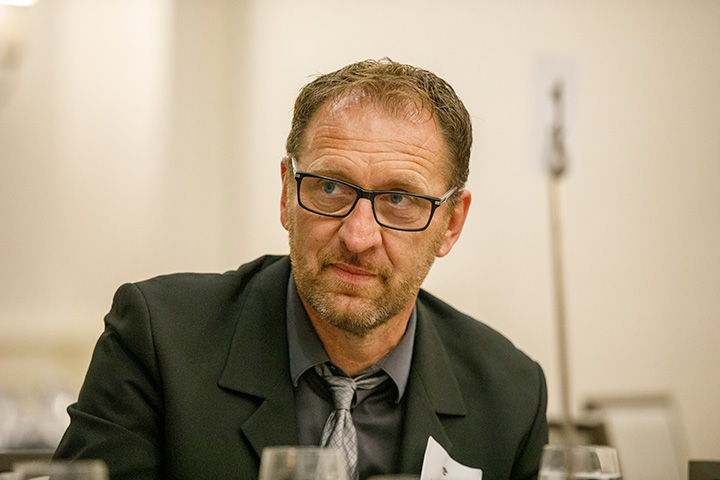 Whether Project Marvel fulfills that promise, however, will depend on how ambitious city leaders are willing to be. As the project evolves, Baruca said, an important question is whether San Antonio will maintain the vision necessary to make it a meaningful addition to the city.
Baruca supports the investment but worries that efforts to control costs could ultimately diminish the project's broader potential.
“We need something that's open all the time that makes an addition to the city itself, not just another arena,” he said.
For a city that has not undertaken a major, transformative downtown development since the 1968 opening of the Tower of the Americas, Baruca sees Project Marvel as an opportunity to build on San Antonio's identity while giving residents and visitors new reasons to spend time downtown.
“There's an emotional part that's super important for the city, especially a city like San Antonio,” he said.
He also sees the project as a way to strengthen San Antonio's position in a competitive regional landscape, particularly as Austin continues to attract major entertainment acts, businesses and visitors.
San Antonio has invested in major tourism attractions such as SeaWorld and Six Flags Fiesta Texas, but those destinations are largely removed from the urban core. Project Marvel, by contrast, could bring more entertainment and activity directly into downtown.
Baruca points to the Pearl as an example of what that kind of transformation could look like. While many San Antonio residents rarely visit the River Walk, he said, the Pearl has become a regular destination for dining, shopping and socializing.
“Just imagine having the Pearl in downtown.”
For that vision to become reality, Baruca believes the new arena and surrounding development must function as a year-round destination rather than a venue that comes alive only when the Spurs play.
He envisions an arena modeled in part on European sports and entertainment venues, where restaurants, bars, shops and other attractions draw visitors throughout the week.
Rather than simply hosting basketball games and occasional concerts, the district should give residents reasons to return regularly. Baruca hopes the arena could accommodate as many as 300 event-related days annually, creating a steady stream of activity to support restaurants, entertainment venues and other businesses.
Such an approach, he said, could benefit San Antonio residents just as much as tourists.
Baruca believes the city sometimes places too much emphasis on attracting visitors without giving equal consideration to the entertainment, dining and recreational opportunities available to people who already live here.
A successful Project Marvel, he added, could also attract businesses and investment by signaling that San Antonio is willing to think bigger about its future.
Still, Baruca recognizes that the project presents legitimate challenges.
Downtown residents and businesses, including those in nearby Southtown, could face construction disruptions, increased traffic and rising property costs. Taxpayers also have reason to scrutinize the financial commitments involved in a development of this scale.
Those concerns deserve serious consideration, Baruca said, particularly for people whose livelihoods depend on the downtown area. He also recognizes the difficult economic conditions facing city leaders as they weigh competing priorities against rising construction costs.
His concern, however, is that financial pressures and political compromises could leave San Antonio with an arena but without the broader vision that made Project Marvel appealing in the first place.
“I'm afraid they're going to start chopping it, and then they're going to just put another Alamodome next to the old Alamodome,” he said.
Ultimately, Baruca believes San Antonio should view Project Marvel as a long-term investment in the city's identity, economy and quality of life, not simply as a construction project or a new sports venue.
“San Antonio has an opportunity to reclaim some of the prominence it once enjoyed while creating a downtown that residents are excited to visit,” he said. “If done right, it can be great for the city.”
Arne Baruca is the chair of the Management and Marketing Department and an associate professor of marketing. His research interests include branding, sports marketing, and the entertainment industry. He has presented at various prestigious conferences, including the Academy of Marketing Science, the Association for Consumer Research, the Society for Marketing Advances, and the Sports Marketing Association.