
Jaguar Journal is a monthly series in which A&M-San Antonio faculty share their expertise to help explain the science, trends, and issues behind today’s headlines.
For San Antonio residents, turning on the faucet can make an increasingly complex challenge seem deceptively simple: Where will the city’s water come from — and how much will it cost to deliver it?
San Antonio is preparing for billions of dollars in improvements to its aging water and wastewater infrastructure while continuing to plan for population growth and periods of drought. Those investments could mean higher water bills for customers in the years ahead.
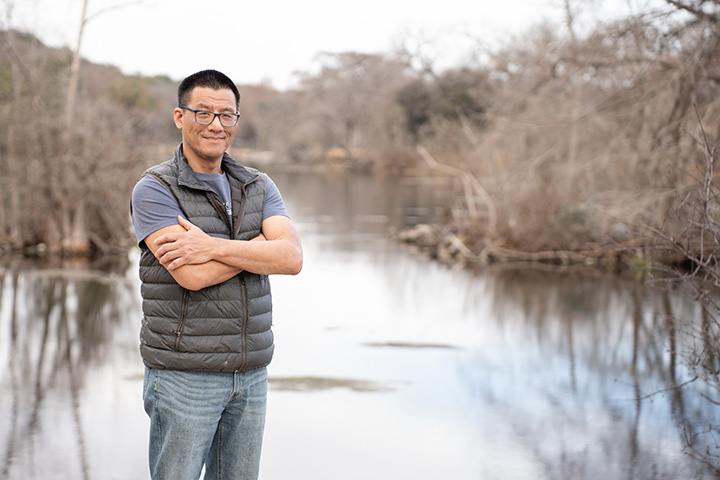
Walter Den, a professor and program coordinator for the University’s Water Resources Science and Technology Program, said San Antonio faces two different but interconnected challenges: securing enough water for the future and maintaining the infrastructure needed to deliver and treat it.
When it comes to water supply, Den said San Antonio has made significant progress in preparing for drought.
Twenty years ago, the city relied heavily on the Edwards Aquifer, making drought a particularly significant threat to the community’s water supply. Since then, the San Antonio Water System (SAWS) has worked to diversify its water portfolio by securing supplies from other aquifers, lakes and surface-water sources. Edwards Aquifer is a vast, underground reservoir that provides drinking water to more than two million people, including the city of San Antonio
SAWS has also developed long-term agreements, such as the Vista Ridge project, which provides access to water from Burleson and surrounding counties through a 142-mile pipeline. The project was completed in 2020 and is designed to provide the city with an additional water supply during periods of need.
Den said the diversification is important because San Antonio’s weather patterns can make capturing and retaining rainwater difficult.
“This has actually been a relatively wet year,” Den said, noting significant rainfall in June and July. “San Antonio is sitting right in the middle of that flash flooding zone. So rain comes fast but then it’s gone.”
Heavy rainfall can quickly replenish the Edwards Aquifer, he said, but it does not necessarily provide a dependable long-term water source. Sustained periods of rainfall are more useful for gradually replenishing groundwater supplies than short, intense storms.
For long-term planning, SAWS and the Texas Water Development Board use rolling 50-year water-management plans that account for projected population and economic growth.
Den said SAWS’ efforts to diversify its water sources have put San Antonio in a stronger position to meet future demand.
“As far as securing enough water, we're on the right track,” he said.
The more immediate challenge may be what happens to the infrastructure that delivers that water.
Much of San Antonio’s water and wastewater infrastructure is decades old, including wastewater treatment facilities, sewer networks, pumping stations and other components of the system. Improving and repairing these systems is expensive, and customers ultimately pay for these repairs through their utility bills.
Den said it is important to understand that a water bill reflects much more than the amount of water flowing from a household’s faucets.
Customers pay separately for water and wastewater services. Water treatment and delivery, wastewater collection and treatment, maintenance, energy and infrastructure investments all contribute to the cost.
Den said he expects rates will eventually need to increase to support the infrastructure investments SAWS is proposing.
Another issue Den believes deserves greater attention: water quality.
While he sees San Antonio as being on a solid path toward securing adequate water supplies, he said water quality presents different challenges. San Antonio’s water is naturally hard because of the region’s limestone geology. Hard water contains elevated levels of minerals such as calcium and magnesium and can cause buildup in plumbing and appliances.
Den also pointed to emerging concerns about protecting the Edwards Aquifer as development continues throughout the region.
As San Antonio grows, balancing water supply, infrastructure investment, affordability and water quality will become increasingly important.
For residents, Den said, the challenge is understanding that the water system extends far beyond the faucet. The pipes underground, treatment facilities, pumping stations, reservoirs and water sources that make that faucet work all require long-term investment.
San Antonio may have made progress securing its future water supply, but ensuring that water remains affordable, reliable and protected will require continued planning and significant investment.
Walter Den is a professor of natural sciences and the program coordinator for the Water Resources Science and Technology Program. In 2025, he was recognized as a Texas A&M University System Regent Professor for his commitment to teaching, research, and service.