
Dr. Lawrence Scott, associate professor of educational leadership at Texas A&M University-San Antonio, has co-authored a new book that explores how collaboration among educators, families, and community stakeholders can improve outcomes for students, particularly those considered at risk.
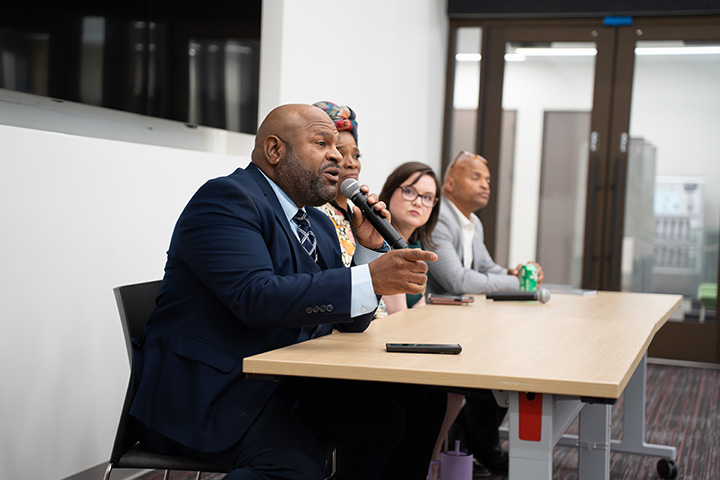
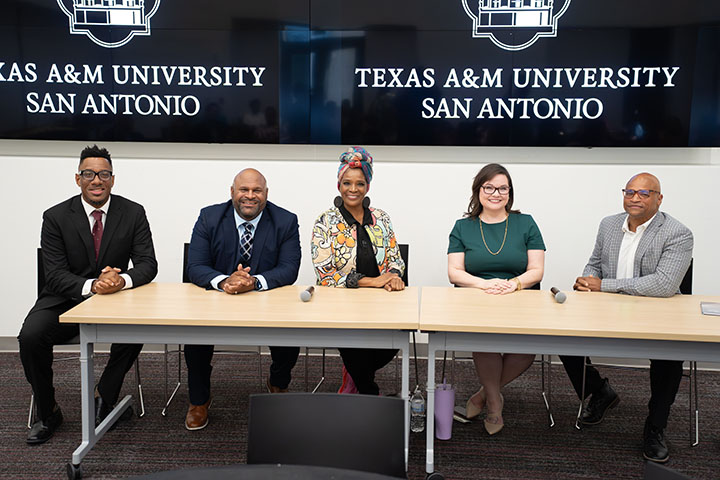 Scott co-wrote “Advocating for Educational Change: Reimagining Student Discipline Through Restorative Practices” with Dr. Jessica Moreno, a project manager at Education Service Center Region 20, which supports school districts and charter schools in improving student achievement and organizational effectiveness. The pair celebrated the book’s release during a June 24 panel discussion at A&M-San Antonio focused on school culture and student success.
The book centers on a case study of a disciplinary alternative campus. Through that lens, Scott and Moreno examine strategies that empower educators to improve student behavior through relationship-building, support, and accountability rather than traditional punitive disciplinary practices.
“We're talking about being innovative in our approach to discipline and creating a culture of success and positive change for students and schools,” Scott said.
The subject is deeply personal for Scott.
After his parents divorced, he spent much of his childhood navigating crime and other socioeconomic challenges. While those circumstances could have led him down a different path, he credits an English teacher and a coach with helping him recognize the value of education and the profound impact caring adults can have on a young person’s life.
Initially, Scott planned to become a lawyer. However, during a study-abroad program in London and Africa and discovered a passion for working with students.
“I thought, if I can make a difference in the lives of these students, I think I can help out by becoming an educator,” he said.
 Scott went on to earn a bachelor’s degree in political science from St. Mary’s University, a master’s degree in educational psychology from the University of Texas at San Antonio, and a doctorate in educational leadership from the University of the Incarnate Word.
He began his career with the San Antonio Independent School District as a teacher and coach before advancing into school leadership as an assistant principal. During that time, he witnessed firsthand how violence, poverty, and other challenges affected students and their families.
“Educators are the purveyors of life or death for a lot of these kids,” Scott said. “School is often their last chance, so as an educator, you’ve got to be on your A-game. You must be willing to go the extra mile for your students and show up when they need you. If you're not willing to do that, then you're in the wrong business.”
Since joining A&M-San Antonio in 2016, Scott has focused on preparing educators to become transformational leaders in K-12 schools. Each semester, he helps host the Best of Both Worlds Symposium, which brings together educational and community leaders to discuss topics ranging from student success to teacher recruitment and retention.
Scott also serves as executive director of the Community for Life Foundation, a local nonprofit that provides scholarships, mentorship, and training to help individuals pursue their educational goals and make a positive impact in their communities.
Drawing on both his professional experience and personal journey, Scott said he brought a unique perspective to “Advocating for Educational Change.” Blending research with practical application, the book offers educators, administrators, and policymakers a roadmap for moving beyond exclusionary disciplinary practices and creating school environments where every student has the opportunity to succeed.
Scott believes that meaningful educational change requires a collective commitment to addressing the broader challenges students face outside the classroom.
“If we want to live in a society where everyone has a free, optimal opportunity to quality education, it's going to take all of us to fill in the gaps where there's a deficit,” Scott said. “Students deserve understanding, especially those experiencing unstable housing, hunger, trauma, or other overwhelming personal circumstances. We have to invest in the child's physical and mental health and holistic needs before we capture their heart.”