
While it’s still several weeks before the Fall 2026 semester officially starts, thousands of incoming students have already experienced their first day at Texas A&M University-San Antonio via New Student Orientation (NSO).
Each summer, NSO, which wraps up August 1, welcomes undergraduate and transfer students. The required program helps set new Jaguars up for success by teaching them how to navigate everything from academic advising and class registration to beloved traditions and student resources. More importantly, it helps them build confidence before the semester begins, as they forge new friendships and familiarize themselves with the campus.
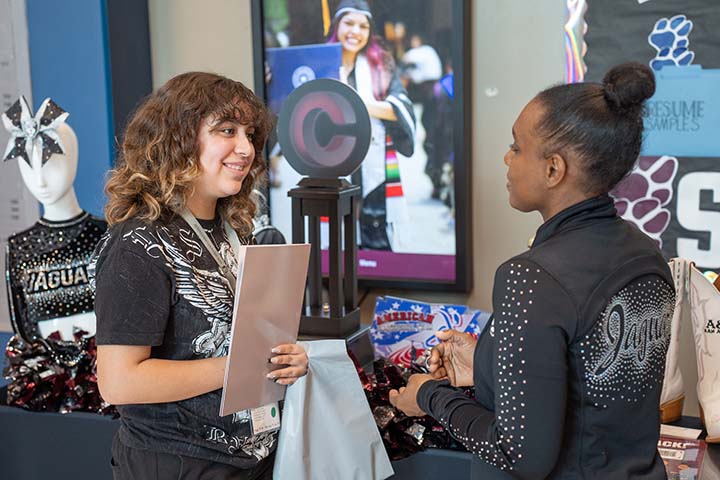
The University hosts about 20 orientation sessions each summer between April and August. This summer, there were more than 2,000 incoming students, including approximately 1,238 first-year students and 850 transfer students. While transfer students begin orientation in April, first-year sessions start at the end of May and continue through the summer, culminating with a final "last chance" session before the semester begins.
Behind every orientation day is a campus-wide effort involving 30 to 40 faculty and staff members, along with about 20 student orientation leaders who guide new Jaguars through every step of the experience.
"It really does take the entire University to get this done," said Julianne Garcia, assistant director of new student orientation. "There’s a lot of moving parts that require collaboration among departments, colleges, faculty and staff. Everyone works together to welcome students and to make them feel at home.”
Throughout the day, students attend presentations on University life, meet with academic advisors, register for classes, and explore a resource fair featuring representatives from across campus, including the library, ROTC, the Mays Center, and numerous student support offices. Faculty members also join students for lunch, sitting with them by academic major to answer questions and begin building connections within their colleges.
For many students, however, the most meaningful part of orientation isn't checking items off a to-do list. It's finding people who make the transition to college feel a little less intimidating.
"I think the biggest takeaway is that they get to build relationships with new people," said Mariah Neumeyer, assistant director of transfer orientation and engagement. "They're excited because they've met new friends. You can hear them talking throughout the day, and it's really about, 'Okay, I found my person. I have someone I can lean on when classes start.'"
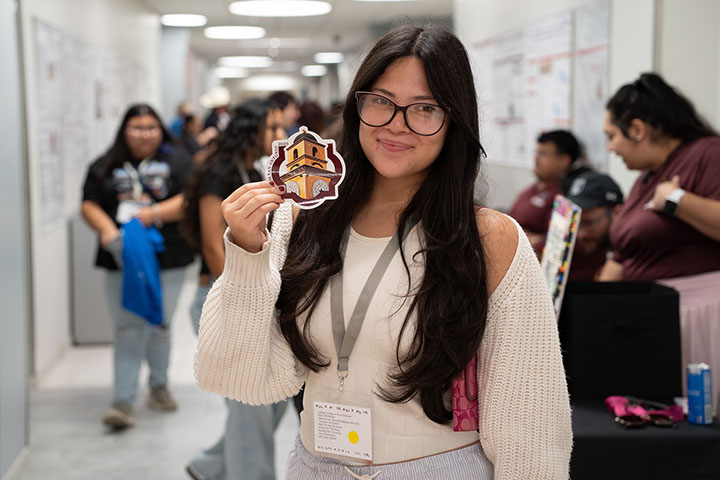
Neumeyer recently watched two students chatting throughout the morning before it was time to divide everyone by academic college for lunch. The pair worried they would be separated until they noticed they were both headed to the same college. Their excitement, she said, was a reminder of how quickly meaningful connections can begin.
"They were just so excited," Neumeyer said. "I think that's what helps them breathe a little easier, knowing they have support.”
Helping students feel that sense of belonging is intentional. While orientation ensures students complete important tasks like advising and registration, the program is also designed to introduce them to the Jaguar experience through campus traditions and peer mentors.
"We try to address the whole student," Neumeyer said. "We allow them to really get to know the University on a deeper level so they hopefully feel that sense of belonging by the time they leave."
The day concludes with a celebratory closing party featuring music, popcorn, drinks, giveaways and Jaguar swag. Students complete feedback surveys before spinning a prize wheel and receiving one of the items many have been anticipating all day: their official Jaguar gear.
Garcia understands those emotions firsthand.
An A&M-San Antonio graduate, she attended New Student Orientation in 2017 before earning her degree in 2021. She still remembers the uncertainty she felt as she walked onto campus and the orientation leader who helped ease those fears.
"My orientation leader did a great job facilitating our group, which led to friendships I still have from orientation almost 10 years later," Garcia said.
Today, she watches a new generation of orientation leaders create those same experiences for incoming students.
"They have someone who can answer their questions, be real with them and make them feel safe," she said.
That transformation — from anxious newcomer to confident Jaguar — is what makes orientation so rewarding for the staff who organize it.
"It's really rewarding to be a part of it," Neumeyer said. "You're watching these students getting ready to fly from the nest for the first time. They're trying to make friends and figure everything out. If you think back to your own orientation and what you were feeling, it's really special to be part of that journey."